Blog
Cold Snaps and Garage Door Springs in Euless
Euless homes built between 1953 and 2014 see spring failures spike when a cold snap hits after months of severe heat. Here's what that stress cycle does and how to check for it.
What to Check
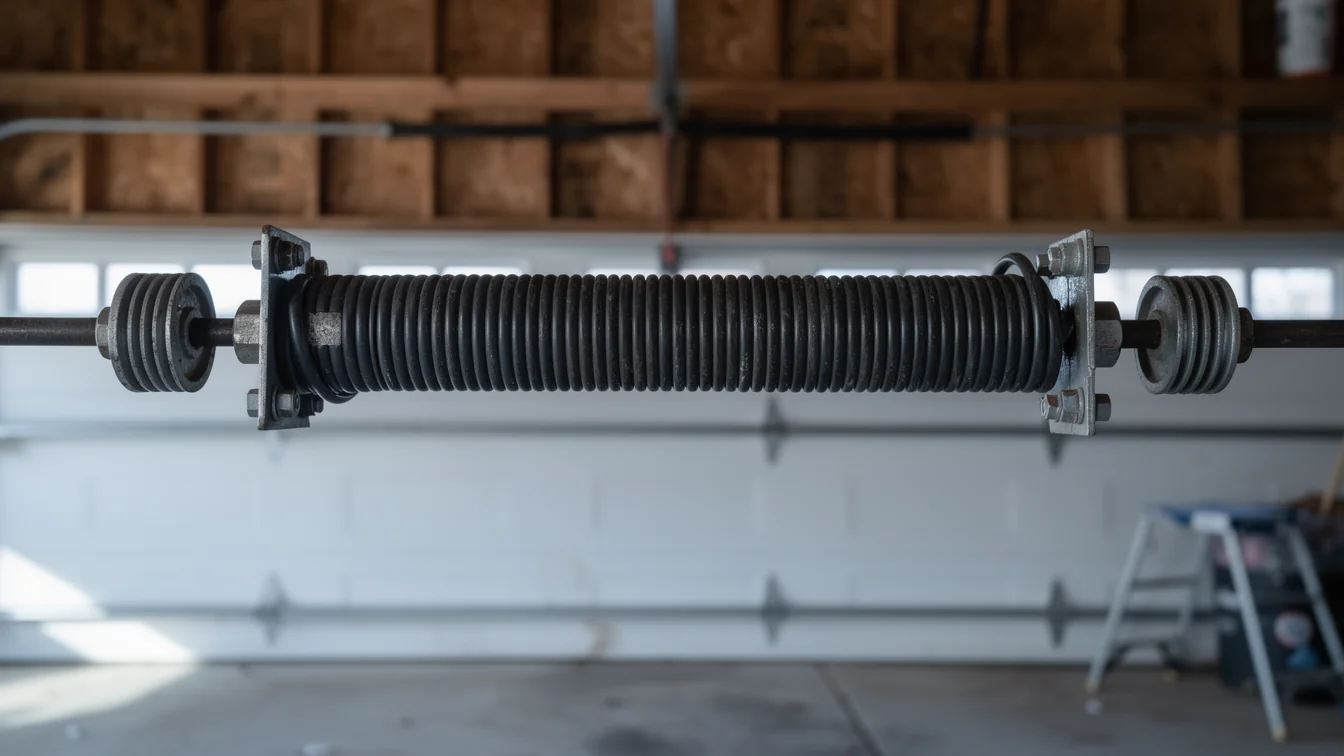
Walk out to the garage and look at the torsion spring above the door, or the two extension springs over the horizontal tracks if your house has those instead. You're looking for a visible gap in the coil - a clean separation means the spring has already gone, not just weakened. Before that happens, listen for a loud bang from the garage, usually first thing in the morning after a hard overnight temperature drop. That bang is the spring letting go.
Check the cable drums on either side too. A spring that's lost tension slowly, rather than snapping outright, will let the door hang crooked - one side a few inches lower than the other when it's about a third of the way up. That's a sign the spring is close to failing, not a cosmetic issue.
If your house falls in the 1980s or 1990s build range that's common across this part of the service area, the hardware is often original or a first-generation replacement. Steel that's spent twenty or thirty summers in severe heat, expanding and contracting every season, is already fatigued before a cold night ever asks it to contract further. That's the combination worth checking for, not just the cold alone.
How Local Conditions Play In
This area sits in a severe-heat climate band, which means the dominant stress on a torsion spring here is heat cycling, not cold - but a sudden overnight temperature drop still matters, and it matters more because of that heat history. Steel that's been stretched hot all season contracts fast when the temperature falls quickly, and a coil that's already lost some temper from months of heat has less give left for that contraction.
So the pattern we see isn't "cold weather breaks springs" on its own - it's a spring that's already weakened by a Texas summer, then pushed past its limit by a fast cold snap. Houses built across the 1953-to-2014 range in this service area have had anywhere from one to seven decades of that cycle, depending on the build year, and the mid-1990s median means a lot of hardware out there has seen thirty summers of it.
This is also why a spring failure here often shows up as a sudden snap rather than a slow sag - the heat-fatigued coil doesn't have much slack left to fail gradually.
The Situation
If your spring has already broken, don't try to open the door with the opener - the opener isn't built to lift the weight of the door without spring assistance, and forcing it strips the gears or burns the motor. Leave the door down, disconnect the opener if you can reach the release cord safely, and call for a replacement.
Torsion springs are rated by cycle count, and a broken one is a broken one - there's no repair, only replacement, and it should be done as a matched pair even if only one side let go, since the other side is carrying the same heat-and-cold history and is close behind.
With 65,647 owner-occupied houses across this service area and a median household income of $143,304, most owners here replace rather than patch - but that's a household decision, not a rule, and a working door with one slightly worn spring doesn't need to become a two-spring job before it actually fails.
Where People Go Wrong
The most common mistake is assuming the cold snap caused the problem and that warmer weather will make it go away. It won't - a weakened spring doesn't recover, it just waits for the next stress cycle, hot or cold.
The second mistake is matching spring wire size by eye instead of by the door's actual weight and the drum size on the shaft. On older stock from the earlier end of the 1953-2014 build range, the original hardware sometimes isn't a size we carry on the truck, and that's a real limit - some of those jobs need a special-order spring, which means a return trip rather than a same-visit fix. We'll tell you up front if that's the case rather than force a wrong-size spring onto the shaft.
The third is ignoring a crooked door because it still opens. A door running on one working spring is putting double load on the opener and the remaining cable, and that failure tends to come fast, not slow.
Questions
Common questions
Why did my spring break overnight when it's been fine for years?
It's rarely just the cold night. A torsion spring that's spent years in this area's severe summer heat loses temper gradually, and a fast overnight temperature drop is often the final stress that finishes it off, not the sole cause.
Can I just replace the one spring that broke?
You can, but most installers recommend replacing both springs together on a double-spring setup, since the second one has the same age and heat history as the one that failed and is usually close behind it.
Is it worth replacing the opener too?
Only if the opener's gears were damaged from being run against a broken spring. If you caught it before forcing the door, the opener itself is usually fine - this is a spring and hardware question, not an opener question.
Recommendation
You Might Also Like
More garage door guides for Euless homeowners.
When the Power Goes Out, Your Opener Doesn't Know the Difference Between a Breaker Trip and a Grid Failure
Euless homes built 1953-2014 see opener strain when summer heat pushes the grid past its limit.
Read guide
Why Pre-Insulation Doors Are Still Common in Euless
Euless homes built mostly between 1953 and 1995 often still carry uninsulated garage doors.
Read guide
Why Your Garage Door Jumps the Track
Euless homes built between 1953 and 2014 face off-track doors from worn rollers and heat-warped tracks.
Read guideReady when you are
Need a garage door sorted in Euless?
Euless Garage Door Pros repairs and installs garage doors, springs and openers in Euless, TX and the surrounding area.